Remote utility sites need more than a basic internet connection.
Pump stations, water treatment plants, substations, gas valve rooms, environmental monitoring stations and smart streetlight cabinets are often installed in places where fiber is unavailable, too expensive or too slow to deploy. Many sites are exposed to heat, humidity, power fluctuations, electrical interference and limited onsite access.
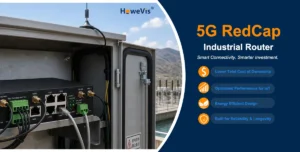
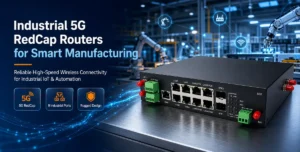
HoweVis industrial 4G, 5G RedCap and 5G routers help utilities and system integrators connect remote assets reliably. They support secure cellular communication, legacy industrial devices, multi-carrier backup and centralized remote management.
Whether you are upgrading an existing SCADA network or building a new smart utility project, HoweVis can help you select a router solution based on your site conditions, carrier bands, interfaces and data requirements.
The Connectivity Challenge for Utility Monitoring
Utility infrastructure is widely distributed. A single project may include water pumps, flow meters, PLC cabinets, pressure sensors, remote terminal units, IP cameras, lighting controllers and environmental sensors across dozens or hundreds of sites.
Wired fiber is reliable, but it is not always practical. Installation may require trenching, permits, construction work and long project lead times. In remote areas, the cost of extending fiber can be difficult to justify for one small monitoring station or cabinet.
At the same time, many utility sites still use legacy equipment. PLCs, RTUs, meters and sensors may communicate through RS232, RS485, Modbus RTU or Ethernet. Replacing all of these devices at once is expensive and can interrupt operations.
The challenge is not simply connecting a site to the internet. The goal is to build a secure and manageable communication layer that can operate in difficult field conditions, work with existing industrial devices and scale across many locations.
HoweVis industrial cellular routers are designed to help solve this challenge.
Built for Harsh and Unattended Sites
A utility router may be installed inside a roadside cabinet, pumping station, electrical enclosure or remote monitoring box for years. These environments are very different from a typical office.
High temperature, humidity, condensation, dust, unstable power and electrical noise can cause standard consumer routers to freeze, restart or fail. When this happens at a remote site, the cost is not only the replacement device. A technician may need to travel to the site, access a locked cabinet, diagnose the issue and restore the connection.
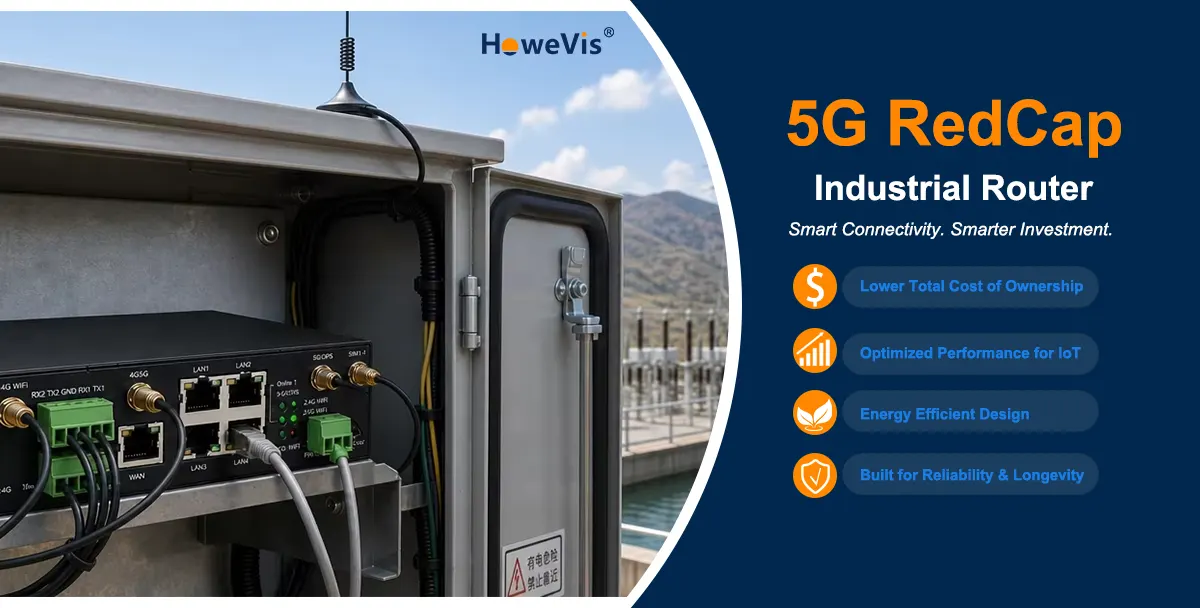
HoweVis industrial routers are designed for projects that need stable operation in these conditions. Depending on the model, key features may include:
- Fanless metal housing for industrial environments
- Wide operating temperature design
- Wide-range DC power input
- Hardware watchdog for automatic recovery
- DIN-rail or wall mounting options
- External antenna support for weak-signal locations
- Compact form factors for control cabinets and outdoor enclosures
These features help reduce avoidable onsite service visits and improve the long-term reliability of remote monitoring networks.
For critical projects, the full system design should also consider cabinet cooling, power protection, grounding, surge protection, antenna placement and local cellular coverage.
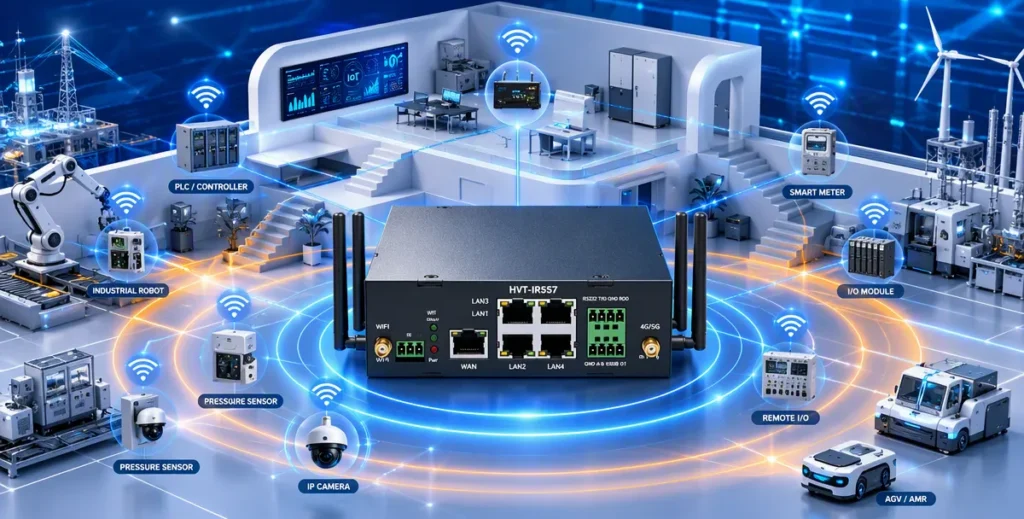
Connect PLCs, RTUs and Legacy Field Devices
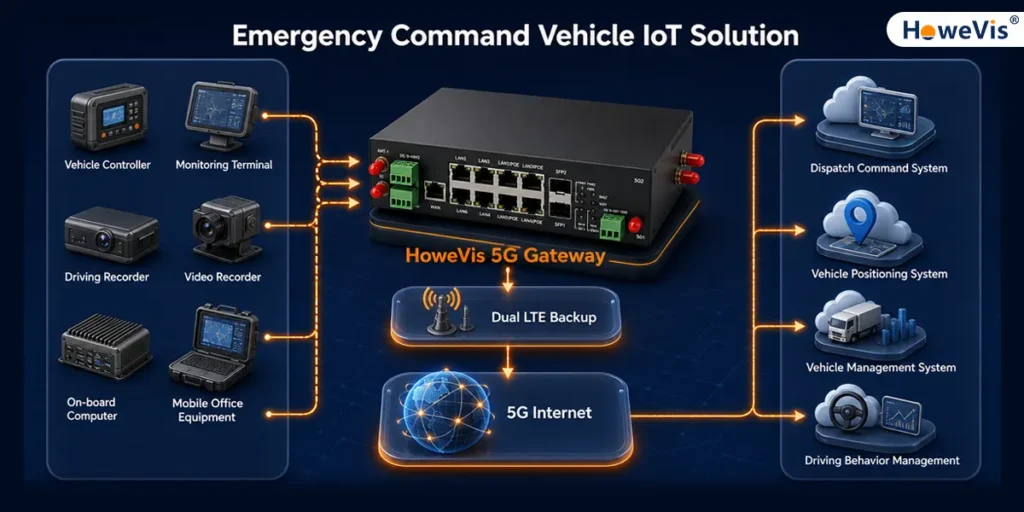
Most utility modernization projects cannot start from zero. Existing field equipment often needs to remain in service while the communication network is upgraded.
A remote water station may include an RS485 level sensor, a Modbus RTU flow meter, an Ethernet PLC and a local IP camera. A power distribution cabinet may have an RTU, a protection relay and an HMI. A gas monitoring site may need to send sensor data to a central control platform while allowing approved engineers to access the local controller remotely.
HoweVis industrial cellular routers can act as a communication bridge between field equipment and centralized systems.
Depending on the router model and project requirement, this may include:
- Ethernet ports for PLCs, RTUs, switches, HMIs and IP cameras
- RS232 and RS485 interfaces for legacy serial equipment
- Serial-to-IP communication for compatible devices
- Modbus RTU to Modbus TCP conversion
- MQTT support for IoT platforms and cloud applications
- Digital I/O for basic status monitoring or alarm integration
- VPN connectivity for secure remote access
This approach allows system integrators to upgrade communications without replacing every meter, sensor or controller in the field.
Before selecting a router, confirm the actual interfaces used at the site. It is important to know whether the application needs Ethernet, RS485, RS232, Modbus gateway functions, MQTT, VPN access, digital I/O or a combination of these features.
Need help checking device compatibility?
Share your PLC, RTU, meter or sensor model with HoweVis. Our team can help review the required interfaces and connectivity functions before you place an order.
Maintain Connectivity with Dual-SIM Failover
Remote monitoring systems depend on stable communications. If a pump alarm, water-level warning, gas pressure event or cabinet intrusion alert cannot reach the control center, the operator may lose valuable time.
A single SIM card and a single carrier create a single point of failure. Signal quality can vary by site. Carrier maintenance, network congestion, SIM issues or temporary outages can affect service availability.
For this reason, many utility projects use a dual-SIM design.
HoweVis industrial routers can support dual-SIM or SIM-plus-eSIM configurations, depending on the model. The router can be configured to use a backup connection when the primary cellular connection is unavailable or fails link-health checks.
A resilient communication design may include:
- Primary and backup SIM cards from different carriers
- Automatic carrier switching based on connection status
- Link monitoring through ping, DNS or other health checks
- Automatic reconnect and scheduled reboot functions
- Hardware watchdog recovery
- Wired WAN backup where available
- External antennas for improved signal performance
- Private APN, static IP or managed VPN architecture where required
Dual-SIM failover does not guarantee that every site will remain connected under all conditions. Actual performance depends on carrier coverage, antenna installation, network design, local power conditions and the availability of a backup carrier. However, it helps reduce the risk of relying on one connection path.
For utility applications, it is best to design for resilient operation rather than depend on a single network, a single SIM card or a single device setting.
Manage Large Utility Deployments Remotely
Managing 10 sites is very different from managing 500 sites.
As a utility monitoring network grows, routine tasks can become expensive if every change requires a field visit. Updating a VPN setting, replacing an APN, checking signal strength, restarting a router or applying a firmware update should not always require sending an engineer to a remote location.
A centralized management approach gives operations teams better visibility and control across the entire deployment.
Depending on the selected solution, remote management may support:
- Online and offline device status monitoring
- Cellular signal and data-usage visibility
- Remote configuration changes
- Batch deployment of device templates
- Remote firmware upgrades
- VPN and tunnel status checks
- Scheduled restart and recovery actions
- Alarm notifications for offline devices
- Secure remote access to connected equipment
- SNMP, cloud platform or other management integration options
This can help system integrators and utility operators respond faster, reduce unnecessary truck rolls and manage multi-site networks more consistently.
For larger projects, HoweVis can support discussions around sample testing, configuration requirements, carrier compatibility, batch provisioning and delivery planning.
Choose the Right Cellular Technology
Not every utility site needs the same level of network performance.
A basic water meter or low-rate environmental sensor may only need occasional data transmission. A pump station may need telemetry, remote PLC access and one camera. A substation or security-critical location may require higher bandwidth for multiple video streams, edge devices or more frequent data exchange.
In general:
- 4G LTE is suitable for basic telemetry, smart metering, alarms and low-data monitoring applications.
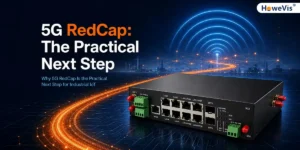
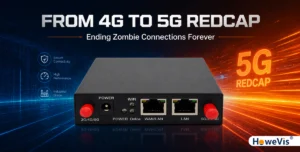
- 5G RedCap is a practical option for many utility IoT projects that need more capability than LTE but do not require the cost, power use or peak performance of full 5G.
- Full 5G is better suited to high-throughput applications, including multi-camera monitoring, video-heavy sites, edge analytics and demanding industrial data backhaul.
The right choice depends on your connected devices, expected data traffic, video requirements, local 5G coverage, power budget, carrier support and total project cost.
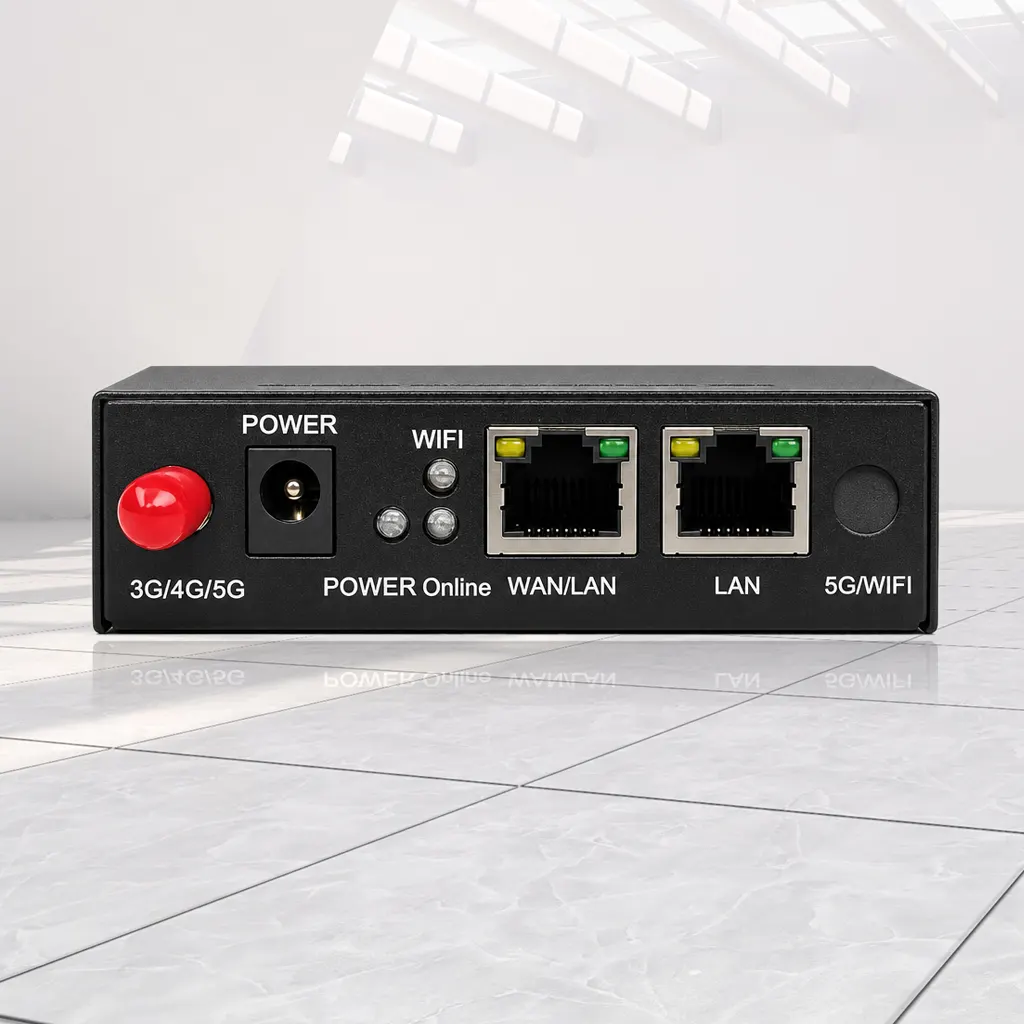
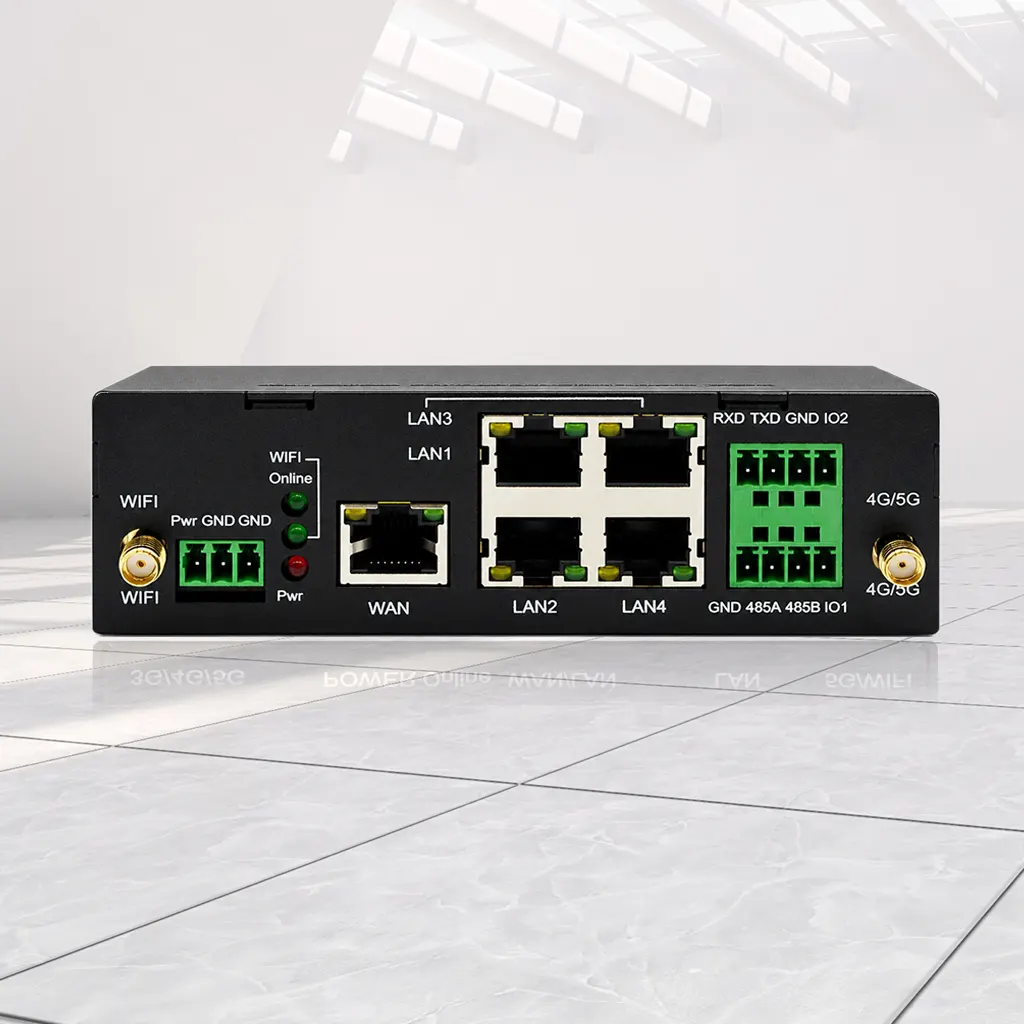
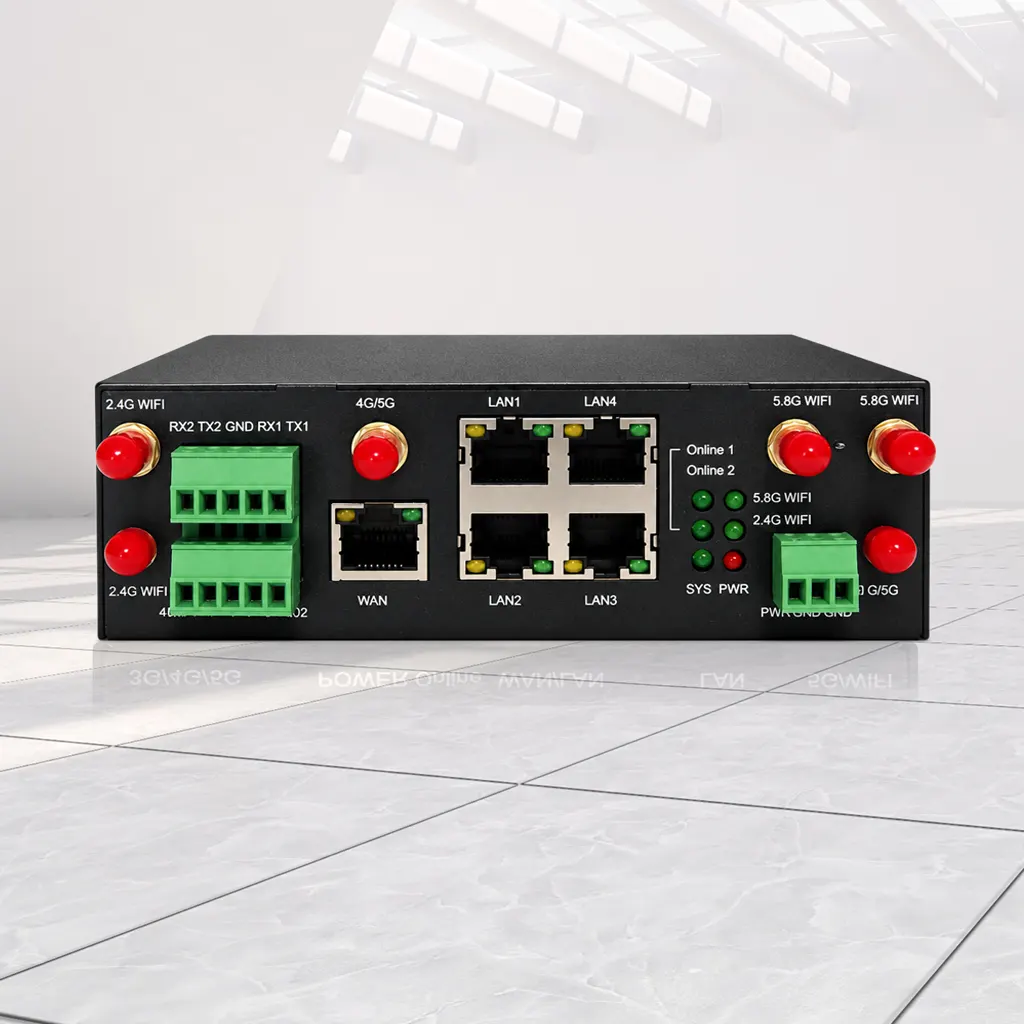
Recommended 5G RedCap Routers for Smart City Projects
Utility Applications
Smart Water and Wastewater Monitoring
Water and wastewater systems often include widely distributed pump stations, reservoirs, water-level sensors, water-quality devices, flow meters and treatment controls.
Industrial cellular routers can connect these assets to a central SCADA system, cloud dashboard or utility operations center. They can support telemetry, alarm reporting, remote equipment access and optional IP camera connectivity where required.
For remote water sites, the network design should consider outdoor enclosures, power conditions, cellular signal strength, interface requirements and cybersecurity policies.
Typical applications include:
- Pump station monitoring
- Reservoir and tank-level monitoring
- Flood-warning systems
- Water-quality monitoring
- Remote flow and pressure measurement
- Wastewater treatment controls
Smart Grid and Power Infrastructure
Electricity infrastructure often operates in environments with high electromagnetic interference, changing temperatures and strict security requirements.
Industrial routers can be used in distribution cabinets, substations, renewable-energy systems, EV charging networks, battery-storage projects and remote terminal unit deployments.
The router can provide cellular access for telemetry, equipment status reporting, remote maintenance and centralized monitoring. For electrical applications, it is important to confirm power-input requirements, EMC conditions, antenna placement, secure-access policy and compatibility with the existing automation system.
Typical applications include:
- Distribution automation
- Substation monitoring
- Transformer and cabinet monitoring
- Solar and energy-storage monitoring
- EV charging connectivity
- Remote RTU and PLC access
Gas, Pipeline and Environmental Monitoring
Gas pipelines, remote valve stations and environmental monitoring points are often located far from fixed broadband infrastructure.
Cellular connectivity provides a practical way to connect pressure sensors, gas detection equipment, weather stations, air-quality monitors and remote control cabinets.
A reliable deployment may require dual-SIM backup, external antennas, VPN connectivity, low-data SIM plans, static addressing or private APN support. These requirements should be evaluated before the project rollout.
Typical applications include:
- Gas valve station monitoring
- Pipeline pressure monitoring
- Methane and gas detection
- Environmental air-quality monitoring
- Weather stations
- Remote tank-level monitoring
- Industrial emissions monitoring
HoweVis routers can also support smart street-lighting cabinets, roadside equipment, smart-city infrastructure and distributed monitoring networks.
Secure Remote Access for Utility Networks
Utility networks should not expose PLCs, RTUs, cameras or field controllers directly to the public internet.
A secure remote-access design should use multiple layers of protection. This may include encrypted VPN tunnels, firewall rules, user permissions, unique device credentials, secure firmware management and network segmentation where needed.
Depending on the model and system design, HoweVis industrial routers can support security functions such as:
- IPsec, OpenVPN or WireGuard VPN options
- Firewall and traffic-control rules
- Remote-access policies
- Secure management interfaces
- User and password controls
- Firmware update management
- Logging and monitoring options
- Network segmentation features where supported
The final security architecture should match the project’s local regulations, cybersecurity policy, carrier requirements and critical-infrastructure standards. NIST guidance for industrial control system environments emphasizes the importance of controlled remote access, authentication, authorization and monitoring for changes or abnormal activity.nvlpubs.nist+1
Why Choose HoweVis
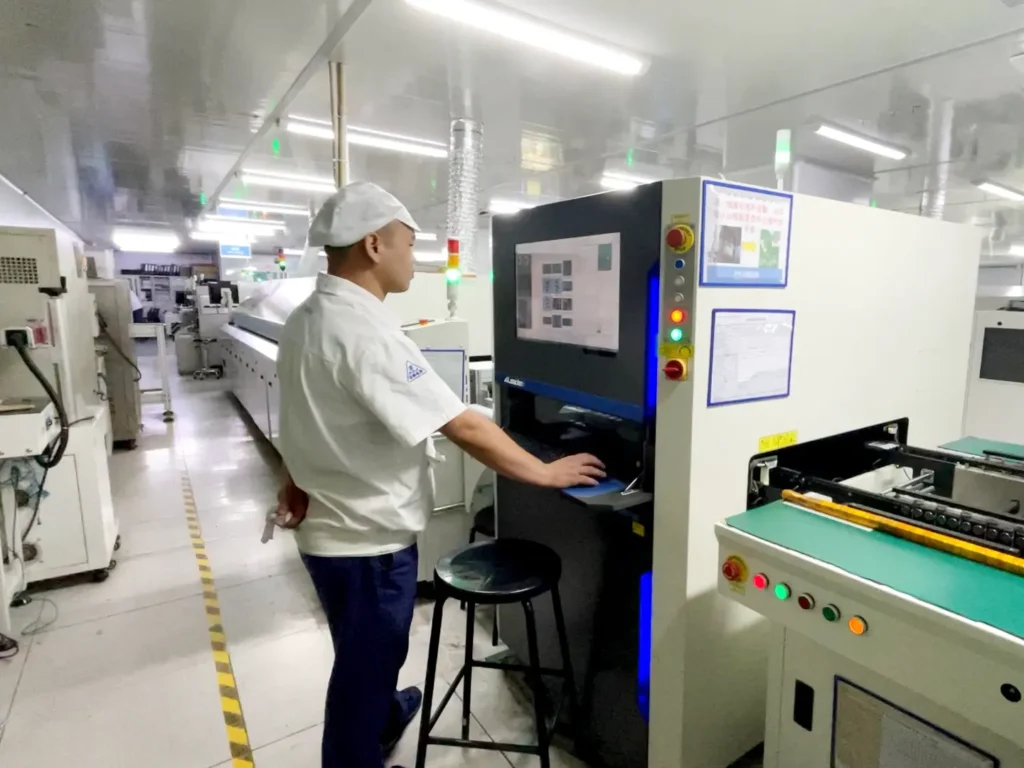
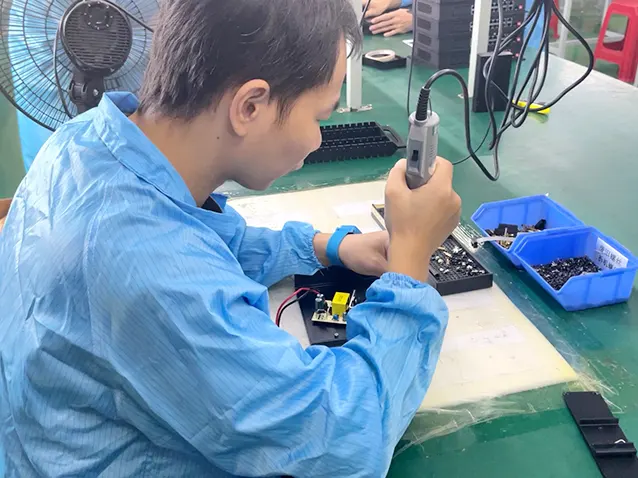
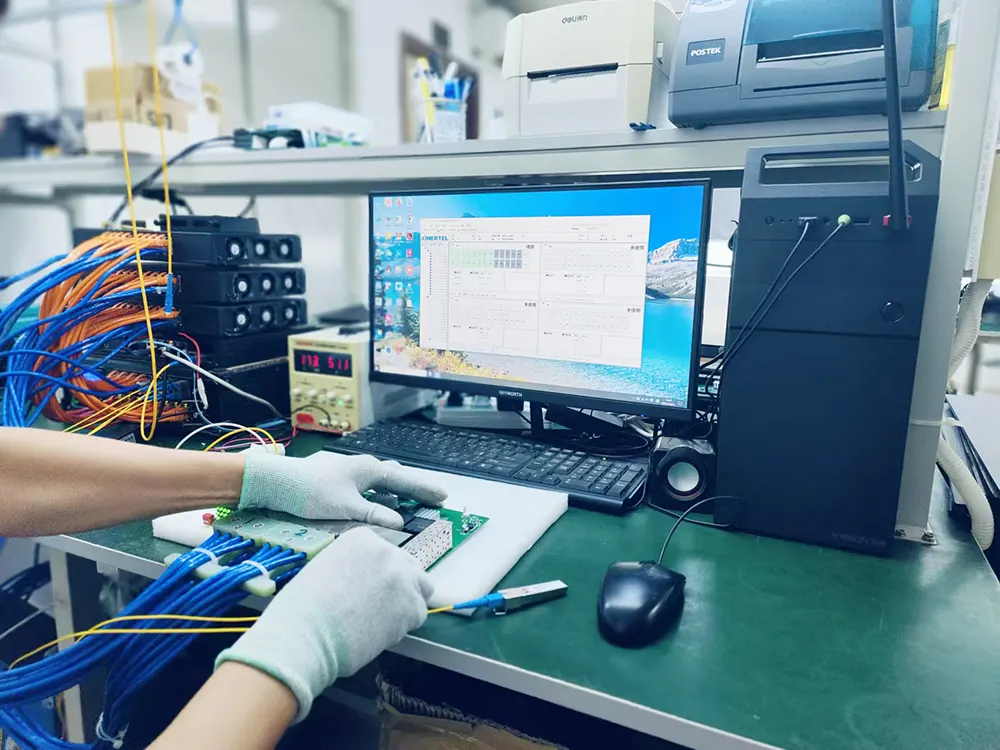
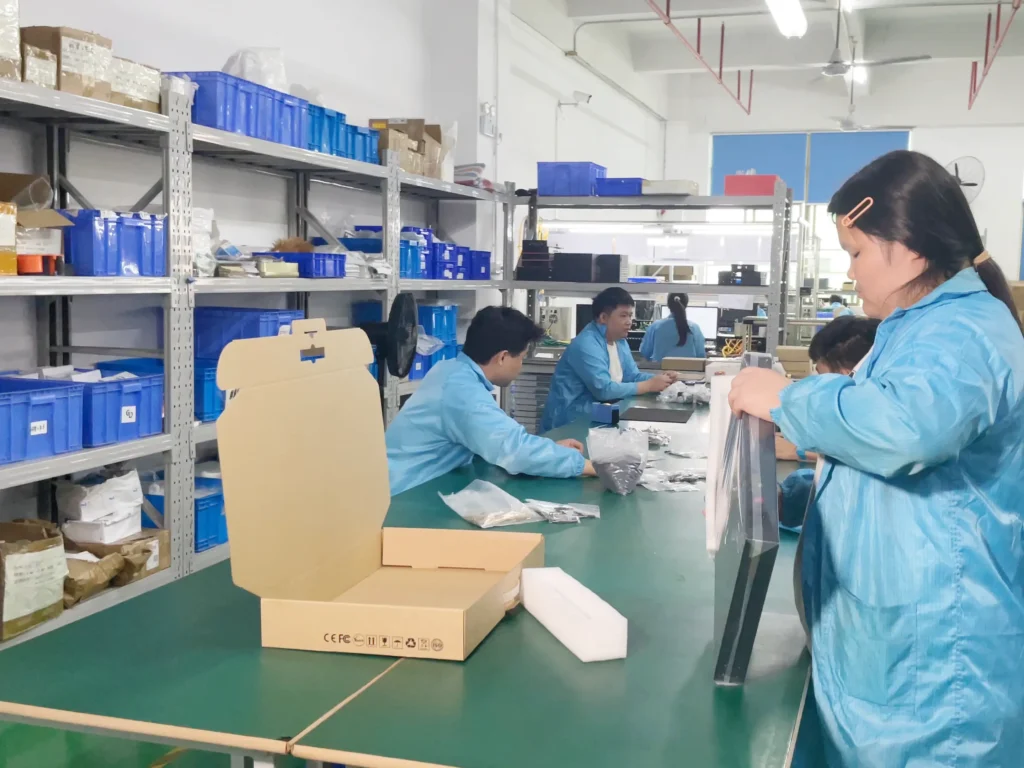
HoweVis supports system integrators, industrial OEMs and utility solution providers that need dependable cellular connectivity for distributed infrastructure.
We offer industrial networking products for remote monitoring, including 4G LTE, 5G RedCap and full 5G router options, as well as industrial switching solutions for complete field-network deployments.
Our team can support your project at different stages:
- Product selection based on carrier bands and application requirements
- Interface review for PLC, RTU, meter, sensor and camera connections
- Sample testing before volume deployment
- Advice on antenna, SIM and network backup design
- Batch order and project delivery planning
- OEM branding and selected customization discussions
- Technical communication for system integrators and project teams
Whether you are connecting a small number of remote monitoring stations or deploying a large multi-site utility network, HoweVis can help you build a more reliable and manageable communication system.
Frequently Asked Questions
Is 5G required for every utility monitoring project?
No. Many low-data applications, such as meter reading, simple alarms and basic telemetry, can run well on 4G LTE. 5G RedCap can be a good middle option for projects that need a more capable and efficient 5G path without the cost and power requirements of full 5G. Full 5G is more suitable for high-data, video-heavy or edge-computing applications.
Can a 5G router connect RS485, Modbus or PLC devices?
Yes, if the selected router includes the required physical interfaces and protocol functions. Before ordering, confirm whether you need RS485, RS232, Ethernet, Modbus conversion, serial-to-IP, MQTT, VPN or digital I/O functions.
How does dual-SIM failover work?
The router uses a primary SIM connection and a backup SIM connection. If the main cellular connection fails or does not meet configured link-health conditions, the router can switch to the backup network automatically. Actual failover performance depends on configuration, carrier coverage and site conditions.
What information should I prepare before requesting a quote?
Please provide your country or region, carrier name, expected quantity, connected devices, required interfaces, data usage, operating temperature, power input, VPN needs, target delivery date and any OEM or customization requirements.