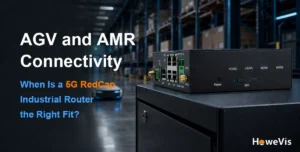
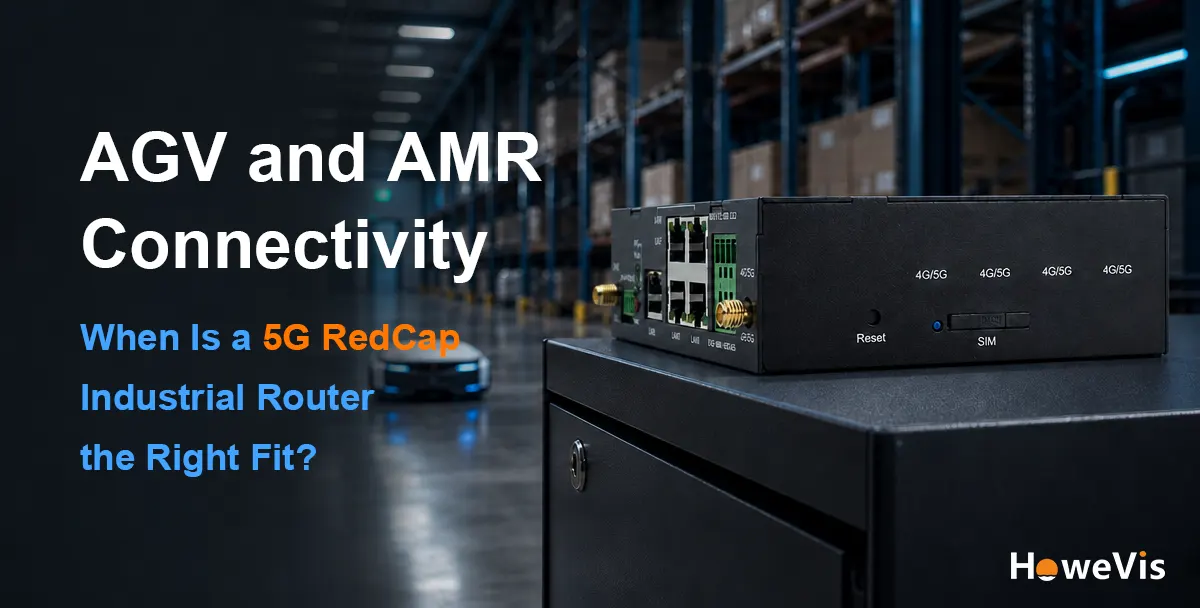
An AGV runs smoothly through a warehouse aisle, then pauses as it enters the loading area. The connection comes back, but the task is delayed—and the customer wants to know whether it will happen again.
For AGV and AMR manufacturers, wireless connectivity is part of the product experience. A vehicle needs to stay connected along its route, not just perform well beside an access point during commissioning. At the same time, adding more hardware capability than the application needs can make a fleet harder to price competitively.
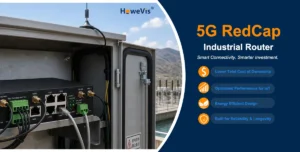
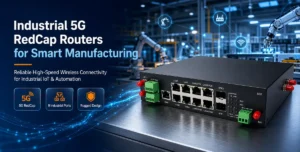
A 5G RedCap industrial router offers another option to evaluate. It can make sense for mobile robots that need cellular connectivity but do not require the throughput of a full-capability 5G device. Here is how to decide whether it belongs in your next project.
Why AGV connectivity breaks down
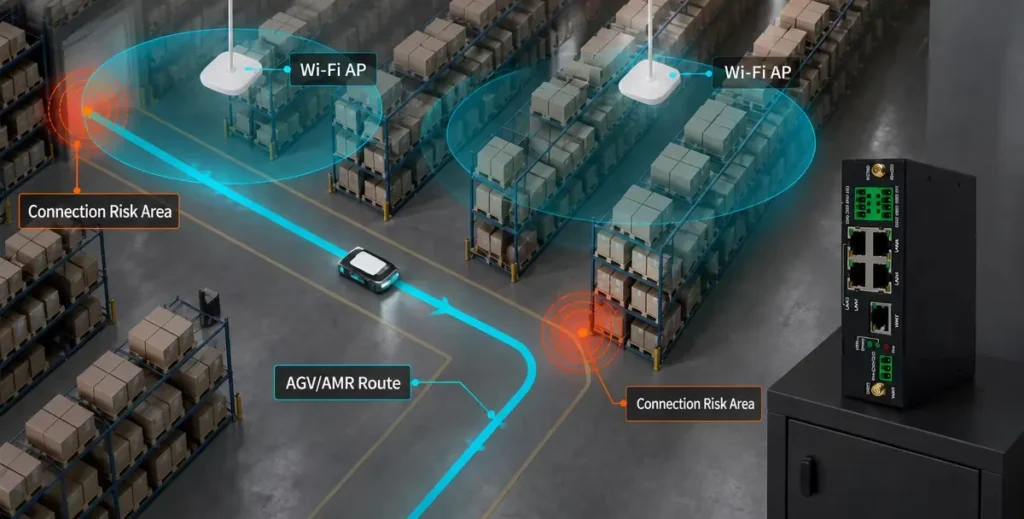
Factory floors are difficult places for wireless networks. Metal racks, machinery, narrow aisles, and changing vehicle positions can all affect coverage. As an AGV moves between areas, the network also has to keep its connection usable for the application running on board.
Industrial Wi-Fi can serve mobile robots well. But its performance depends on access point placement, interference management, and roaming configuration. When disconnects happen repeatedly at the same points on a route, adding another AP without investigating the cause may simply move the problem elsewhere.
That is the practical reason to evaluate other options: not because Wi-Fi is inherently unsuitable, but because some sites need a different way to support vehicles in motion.
What is 5G RedCap?
RedCap stands for Reduced Capability. Introduced in 3GPP Release 17, it is a streamlined form of 5G NR for devices that do not need the full feature set of standard 5G equipment. By reducing supported bandwidth and terminal complexity, RedCap creates a middle ground between lower-rate IoT connectivity and full-capability 5G.
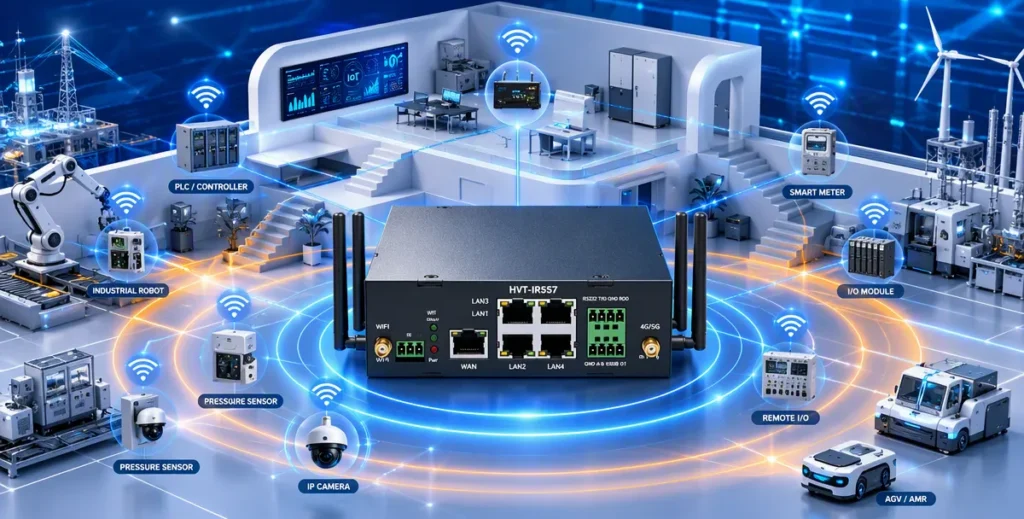
For an AGV or AMR, a RedCap industrial router can provide access to a compatible 5G standalone network. That opens up a cellular alternative to Wi-Fi without assuming every vehicle needs a high-throughput 5G router.
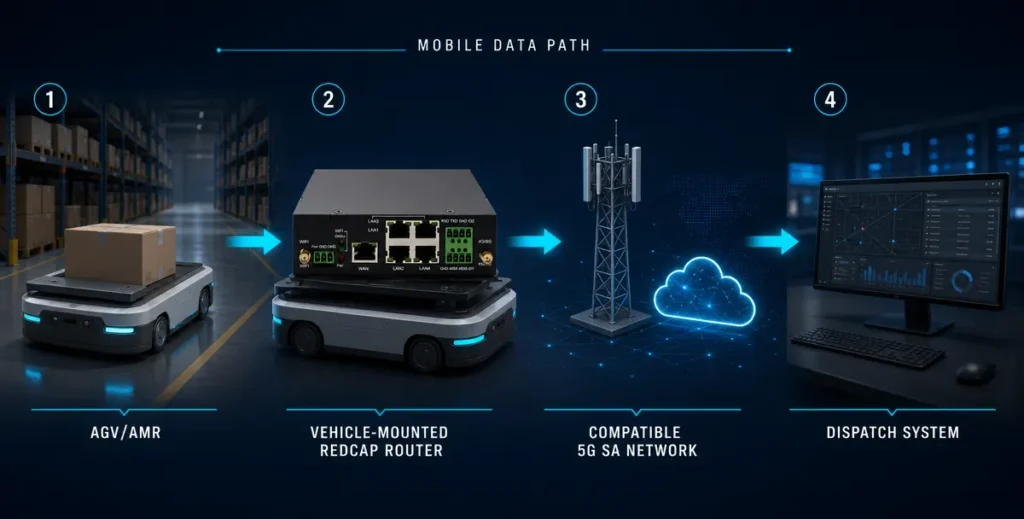
The distinction matters: RedCap is a way to right-size the connection, not a promise of zero dropouts. Real-world performance still depends on coverage, handovers, network capacity, router configuration, and the data the vehicle needs to exchange.
How does it compare with Wi-Fi and full 5G?
| Industrial Wi-Fi | Full-capability 5G | 5G RedCap | |
|---|---|---|---|
| Best starting point | The site has Wi-Fi designed and maintained for vehicle routes | The application needs higher throughput or other full 5G capabilities | Vehicles need cellular connectivity, but their data requirements are moderate |
| What to verify | Coverage, interference, roaming, and performance with the fleet online | Coverage, required capacity, device cost, and network cost | Compatible 5G SA coverage, handovers, and performance with actual vehicle traffic |
| Cost question | What does reliable coverage across every route cost to build and maintain? | Will the application use the additional capability? | Does a simpler terminal improve total project cost? |
Where RedCap earns a closer look
Your vehicles struggle at network boundaries
A pause near the same doorway or warehouse aisle is useful evidence. Before choosing replacement hardware, record where the interruption occurs, how fast the vehicle is moving, how many vehicles are online, and what the application does when the connection drops.
If Wi-Fi roaming remains difficult to resolve, testing a cellular network along that same route gives you a meaningful comparison. Measure the vehicle’s task performance—not just the signal bars on a router.
Your application does not need full 5G throughput
Some fleets mainly exchange dispatch instructions, status updates, and operating data. Others also transmit camera footage or larger files. A RedCap router should be selected against the actual workload, including peak traffic and the number of vehicles operating at once.
This is where a trial matters. A specification can tell you what a device supports; a site test tells you whether that capacity is enough for your fleet.
You need a clearer cost picture
The router purchase price is only one part of the decision. Network infrastructure, installation, connectivity, commissioning, and ongoing support all affect the cost of a fleet deployment.
RedCap’s simpler terminal design can be attractive, but the business case should be calculated for the complete project. Compare solutions using the same vehicle count, coverage area, traffic requirements, and expected support needs.
What to test before committing to a fleet rollout
Run the trial on normal vehicle routes, with realistic application traffic and more than one vehicle online. Focus on six questions:
- Coverage: Are there weak spots in aisles, corners, loading areas, or parking locations?
- Handovers: What happens to application traffic as a vehicle moves between coverage areas?
- Latency and packet loss: Do results change when the fleet is busy?
- Capacity: Can the network carry control data, telemetry, and any video the application requires?
- Vehicle fit: Are the router’s power input, ports, size, mounting, and environmental specifications suitable?
- Total cost: How do the options compare once network setup and ongoing support are included?
A short interruption is not equally important to every application. The test should capture what operators and fleet-management software actually experience—not only a network speed result.
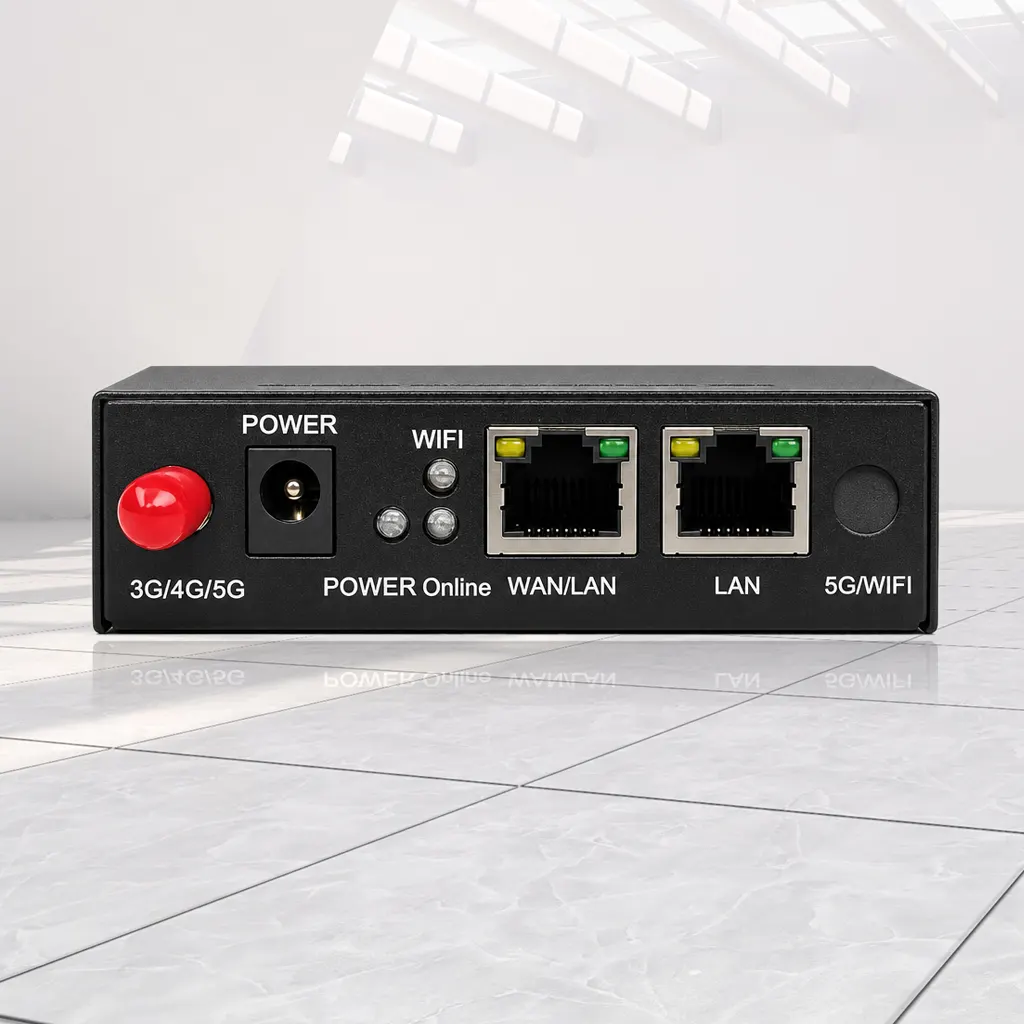
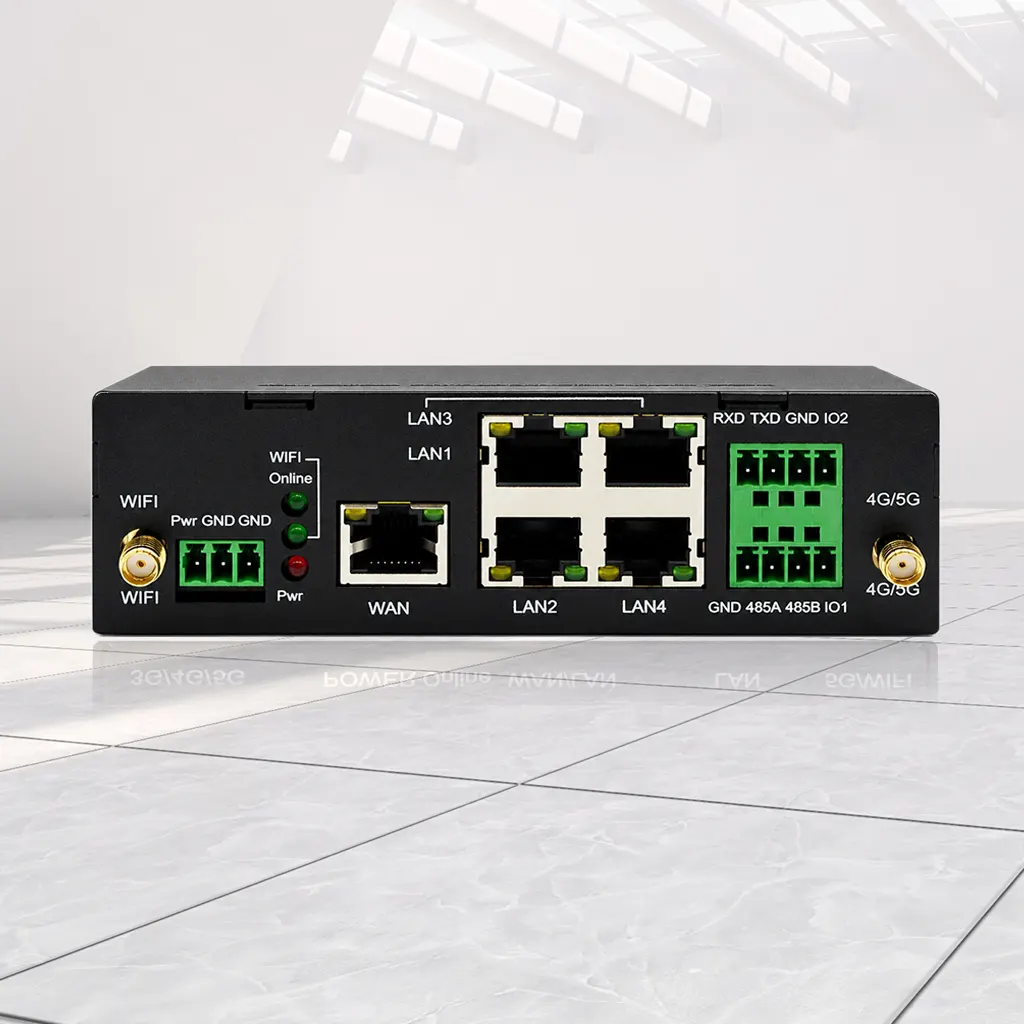
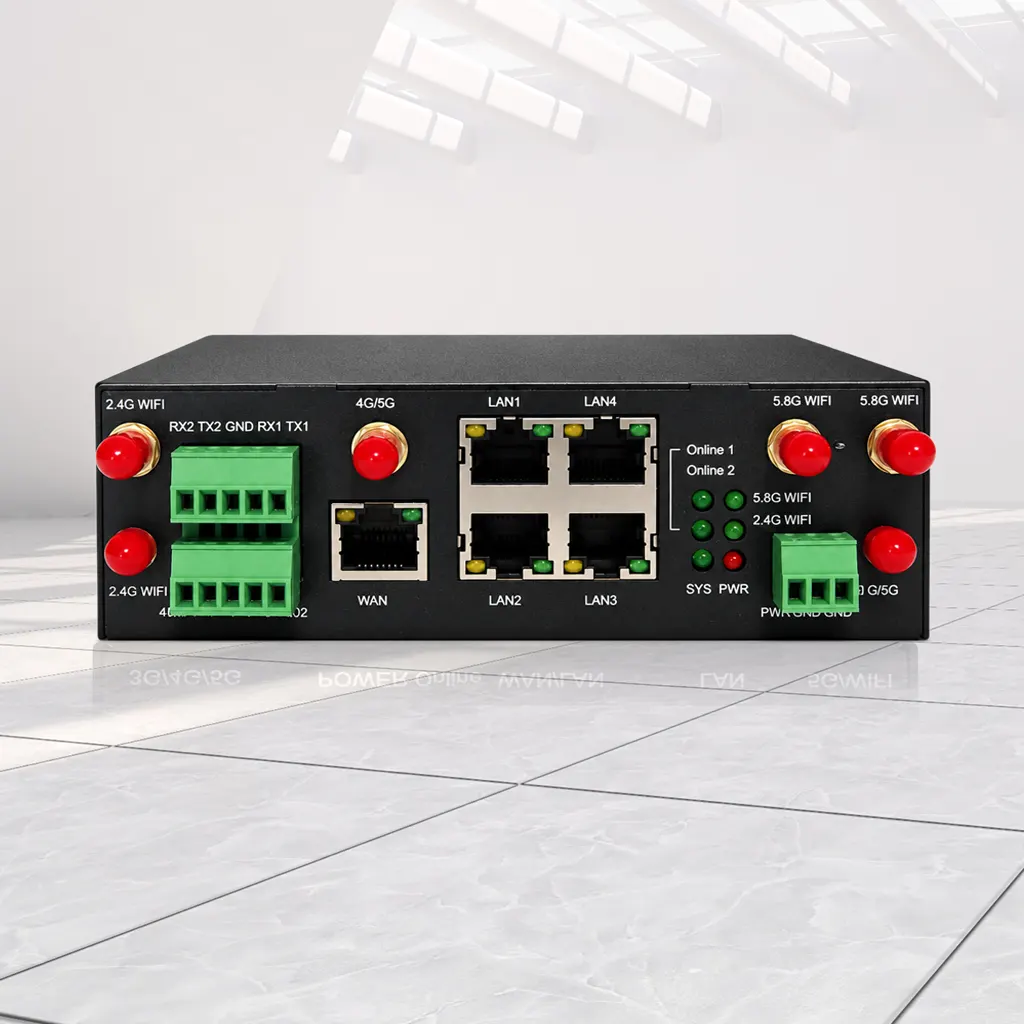
Recommended 5G RedCap Routers for AGVs and AMRs
Frequently asked questions
Is 5G RedCap suitable for AGVs and AMRs?
It can be a good fit when a vehicle needs cellular connectivity without the throughput of a full-capability 5G router. Check the application’s traffic, network compatibility, coverage, handover behavior, and total cost before selecting it for a fleet.
Is RedCap better than industrial Wi-Fi?
Not necessarily. A well-designed Wi-Fi network may meet the project’s needs. If vehicles repeatedly lose connectivity while roaming, compare Wi-Fi and RedCap using the same routes, fleet load, and application-level measurements.
Do we need a private 5G network?
Not always. The essential requirement is access to a compatible 5G standalone network with suitable coverage. A private 5G network is one option when a facility wants more control over on-site connectivity, but its deployment and operating costs also need to be considered.